
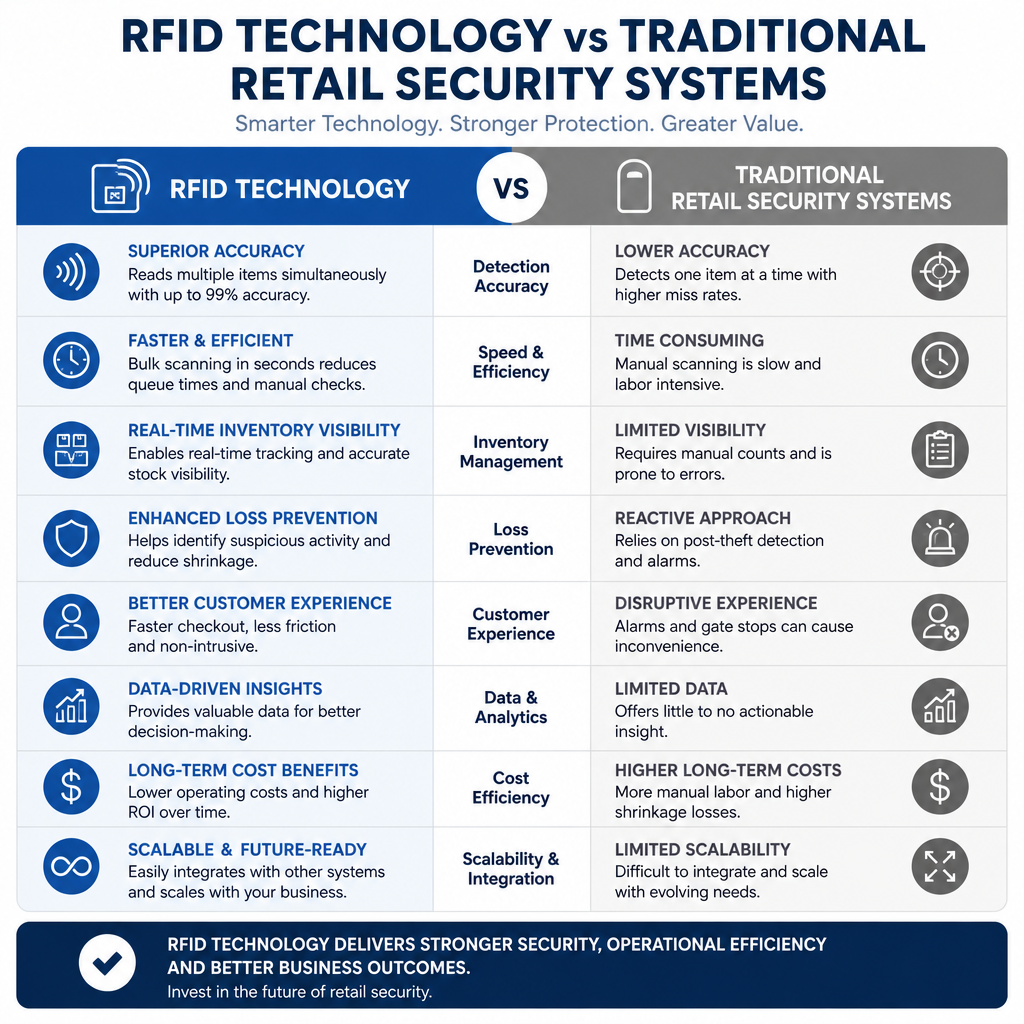
In today’s dynamic retail landscape, loss prevention is a crucial factor for success. Traditional anti-theft systems and modern RFID technologies offer different approaches and benefits. In this article, we will highlight the differences between these two techniques and show you how they can help reduce shoplifting and inventory shrinkage.
Traditional Anti-Theft Systems
Traditional anti-theft systems, also known as electronic article surveillance (EAS), typically use electromagnetic, acousto-magnetic, or radio frequency tags. These tags are attached to merchandise and can trigger an alarm when passing through the theft detection system at the exit.
Advantages of Traditional Systems
Traditional anti-theft systems offer several advantages:
- Cost Efficiency: These systems are generally more affordable to acquire and are well-suited for retailers with limited budgets.
- Easy Installation: The installation is straightforward, and the system can be quickly integrated into existing store designs.
- Wide Application: Suitable for a variety of products and merchandise categories commonly found in retail.
- Reliability: The systems are tried and tested, showing high reliability in theft prevention.
RFID Technology in Retail
RFID technology is a more modern form of merchandise protection that uses radio frequencies to store and retrieve information about products. RFID tags contain a small transmitter and receiver and can hold significantly more information than traditional EAS tags.
Advantages of RFID Technology
RFID offers numerous advantages over traditional systems:
- Real-Time Monitoring: Provides the ability to monitor inventory in real-time, improving stocktaking and inventory management.
- Automation Potential: RFID can automate processes such as checking goods in and out, thereby increasing efficiency.
- Accurate Data Tracking: Allows for the tracking of individual items, aiding in loss prevention and store inventory management.
- Versatility: RFID tags can be used in various environments, including areas that may be challenging for traditional tags.
Which Solution is Right for Your Retail Business?
The decision between RFID and traditional anti-theft systems depends on various factors, including budget, type of retail, and specific security requirements. Here are some considerations Swiss retailers should take into account:
- Budget: RFID technology typically requires a higher initial investment but can save costs in the long run through increased efficiency and reduced losses.
- Product Types: Certain products that indicate a higher theft rate can be specifically tagged with RFID to ensure greater security.
- Business Size and Inventory Management: Larger stores or those with complex supply chains can benefit from RFID’s real-time data processing.
Practical Tips for Improving Merchandise Protection
Regardless of the chosen technology, retailers can optimise their shoplifting prevention and merchandise protection through several measures:
- Regular Staff Training: Your employees are the first line of defence against shoplifting. Regular training can increase awareness and vigilance.
- Zone Monitoring: Identify areas in the store that are particularly prone to theft and enhance monitoring there.
- Customer Recognition: Greet customers upon entry. This not only reduces anonymity but also makes theft more difficult.
- Improve Infrastructure: Ensure your store has adequate lighting and well-placed mirrors to minimise blind spots.
Conclusion
The decision between RFID and traditional anti-theft systems requires a thorough analysis of your retail business’s needs and circumstances. Both technologies offer specific advantages for reducing shoplifting and loss prevention depending on the application. It is important to choose a tailored solution that aligns with your business goals.