
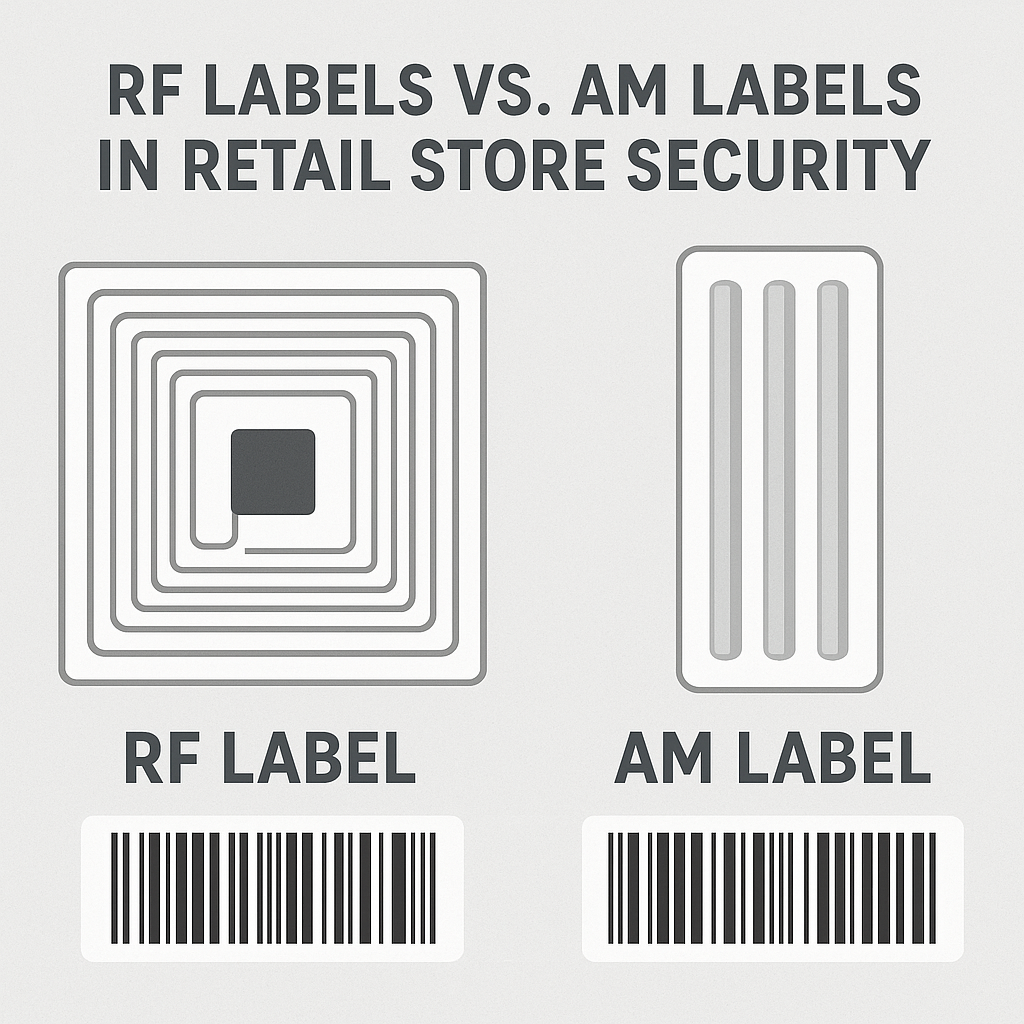
Differences between RF and AM labels
Protecting merchandise is essential for retailers and security managers in Switzerland. Shoplifting and inventory shrinkage are major challenges, and effective anti-theft systems are key to keeping losses down. Two of the most widely used technologies are RF and AM labels. In this article we explain the differences between them and share practical loss-prevention tips.
RF (radio frequency) and AM (acousto-magnetic) labels are both popular, but they differ in how they work and where they are best used.
RF labels
RF labels work on the radio-frequency principle. They consist of a coil and a small capacitor that form a resonant circuit. Retailers often choose them for their cost efficiency and easy integration into existing systems.
- Advantages: inexpensive, easy to handle and suitable for products without metal content.
- Disadvantages: can be affected by metal surfaces.
AM labels
AM labels are based on acousto-magnetic technology. They contain two thin metal strips that vibrate in a magnetic field. This allows reliable detection even on products containing metal or liquids.
- Advantages: more effective detection through metal and liquids, ideal for electronics and packaged food.
- Disadvantages: slightly more expensive than RF labels.
Practical loss-prevention tips for retailers
The following measures help prevent shoplifting and improve store security:
- System choice: choose the anti-theft system that best fits your product range. For stores with many metal items, AM labels are often the better option.
- Staff training: train your team regularly in loss-prevention techniques and in handling suspicious situations.
- Customer service: proactive service deters potential thieves. Greet every customer and offer help.
- Video surveillance: well-placed cameras both deter theft and secure evidence.
- Strategic merchandising: place expensive or high-risk products within sight of checkouts or staff.
Further security concepts for retail
Besides RF and AM labels, other solutions also help prevent losses:
- RFID technology: modern RFID systems offer extended item tracking, but are more costly to implement.
- Mechanical protection: locks and safer boxes for particularly valuable goods.
- Inventory checks: regular stocktakes help identify shrinkage and close security gaps.
Conclusion
RF and AM labels are key components of merchandise protection in Swiss retail. Each system has specific advantages depending on product types and store environment. By choosing the right technology and combining it with other measures, retailers can effectively reduce shrinkage and increase profitability. Ongoing staff training and a combination of security techniques are the keys to successful loss prevention.